You know the routine. You get home, you want to play, and then the calculation starts. Is it too late? Will the person downstairs knock? Did you already practice this morning — did you use up your goodwill for the day? You pick up the bow, play half a passage, hear someone move above you, and put it back down.
You are not short on motivation. You are short on hours you are actually allowed to use.
This is the problem an electric viola solves — and it is the one thing almost nobody mentions when they write about them. Most articles lead with pickups and body types and brand comparisons. That information matters, eventually. But the real reason most violists end up searching for one is simpler: they want to practice without the guilt, the clock-watching, and the low-grade anxiety of being heard through walls they did not choose to share.
What Changes When You Plug In
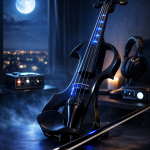
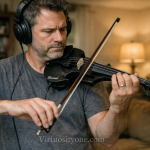
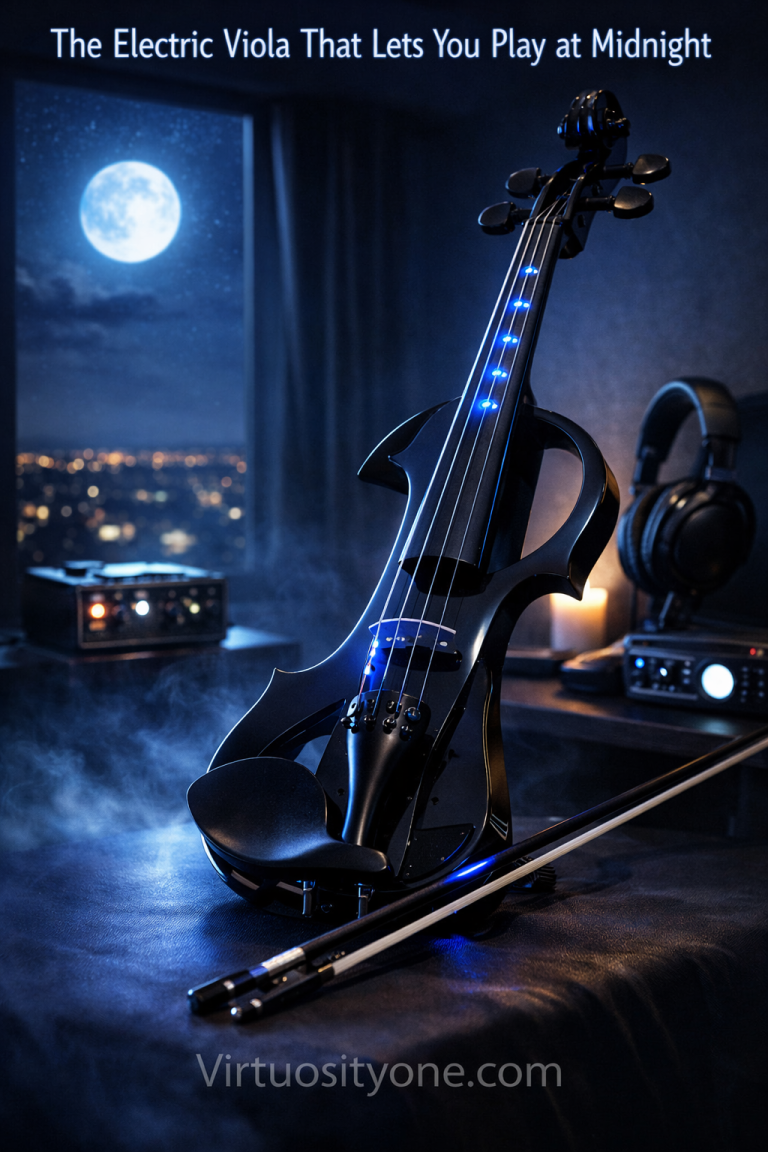
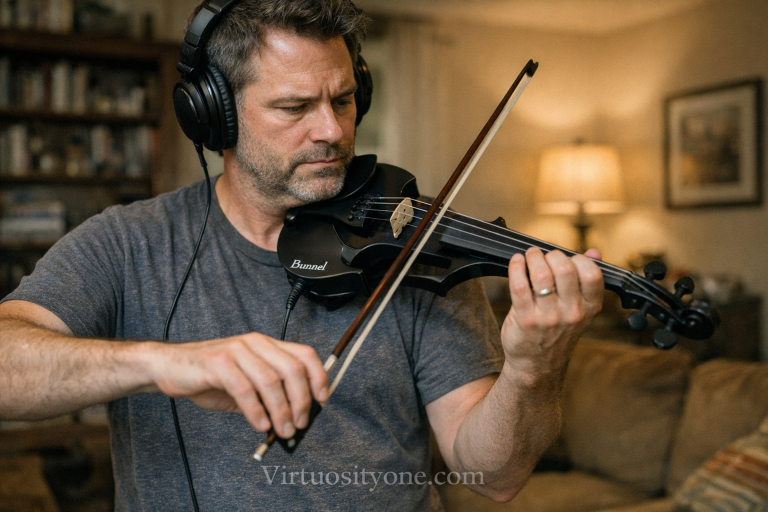
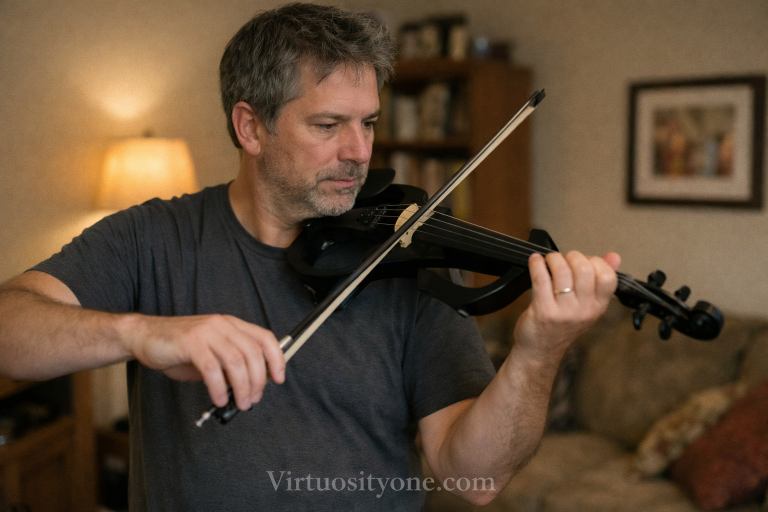
Plug in a pair of headphones and the sound exists only for you. Not through the wall, not through the ceiling, not into the apartment below where someone is trying to get their child to sleep. Just you, your bow, and the instrument — at midnight if that is when you think clearest, at 6am if that is the only quiet the day offers, for as long as the passage demands without watching the clock.
An electric viola without amplification produces a faint acoustic ghost — audible to you in a quiet room, inaudible to anyone beyond it. With headphones, even that disappears into private sound. The technique is identical. The freedom is not.
One player described it this way: the electric let them practice without being self-conscious for the first time. They stopped second-guessing every note. They played more in a single week than in the previous month. That shift — from careful and rationed to free and consistent — is where the instrument’s real value lives, and it has nothing to do with specs.
One Question Before You Buy Anything
Are you buying this primarily to practice in silence, or do you also need to perform amplified?
The answer shapes everything. A violist who needs silent practice first and stage capability second should look for a built-in headphone output, light construction, and straightforward electronics. A violist who needs to hold their own against electric guitars and a drum kit needs pickup quality, feedback resistance, and enough tonal control to cut through a live mix.
Both are legitimate needs. They point toward different instruments, and conflating them is how players spend money on the wrong thing and blame the category rather than the mismatch.
Why the Market Is Smaller Than You Expect
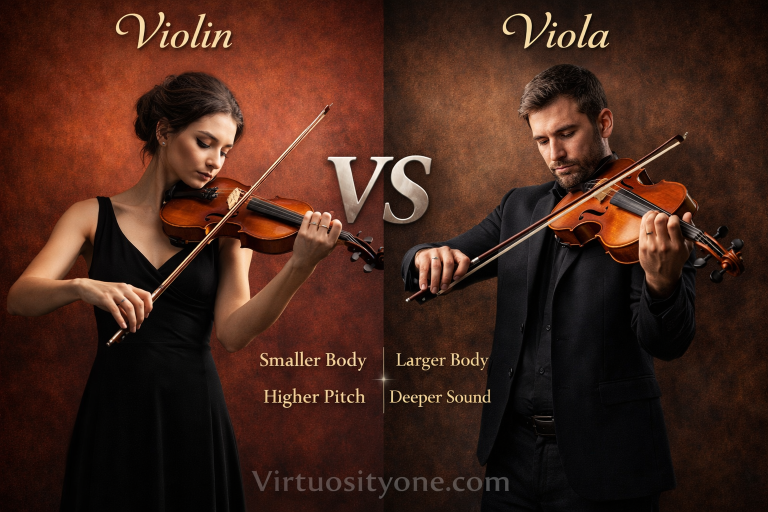
Dedicated electric viola models are fewer than electric violins. Demand is lower, and several manufacturers solve the problem by producing an electric violin that accepts viola strings — effectively a convertible. This is not a bad solution. It works. But the body dimensions may not match a true dedicated viola, and for players who have spent years shaping their technique around a specific instrument feel, that difference matters over a long session.
When you are comparing models, check whether you are looking at a dedicated electric viola or a convertible. Know what you are buying before the money moves.
The Instruments Worth Knowing
NS Design NXT and CR series. The name that surfaces most consistently among players who take electric performance seriously. Purpose-built, frameless, with a shoulder rest integrated into the body and a choice of active or passive pickups. The playing position is immediately natural. The tone is consistent in a way that cheaper instruments are not. Starting around $800 — not cheap, but the gap between this and the instruments below it is audible and tangible from the first note.
Yamaha Silent Viola. The most honest instrument in this market for the player whose primary need is practice without noise. Built-in headphone output, batteries included, lightweight enough that an extended session does not punish your neck and shoulder. In the $500–$700 range, it does exactly what it promises and nothing it does not. For many apartment players, this is the answer and the search is over.
Wood Violins Stingray. For the player who wants the stage to notice the instrument before a note is played. The Tru-Tone pickup produces a clean, authentic signal, and the design is striking enough that it belongs in front of an audience rather than hidden in transit. Starting around $800, climbing for custom configurations.
Stagg EVA. The sensible middle ground — a step above entry-level without requiring the investment of a Yamaha or NS Design. Reliable, straightforward, and sufficient for a player who wants something dependable while they work out how the electric fits into their life.
Cecilio. Under $300, complete outfit included. Not a serious performance instrument, but an honest entry point for anyone who is not yet ready to commit financially to the electric path. If you try it for six months and find it changed how you practice, you will know exactly what to buy next.
On Amplifiers — and When You Do Not Need One
For silent practice, you do not need an amplifier. A headphone output on the instrument itself, or a small battery-powered headphone preamp, is all that stands between you and unrestricted practice hours.
For performance or recording, use a dedicated acoustic instrument amplifier — not a guitar amp. Guitar amplifiers are voiced for magnetic pickups. Piezo pickups, which electric violas use, require a different impedance and a different frequency response. Running a viola through a guitar amp produces a sound that is shrill and hollow in equal measure. AER, Fishman, and Bose all produce well-regarded acoustic amplifiers across a range of budgets. Sweetwater’s acoustic amplifier section is a reliable place to compare specifications and read verified buyer experience before spending.
For direct recording into a computer, an audio interface with a quarter-inch input is all the equipment you need. No microphone, no room treatment, no compromise on sound quality. Many players find this setup more practical than amplification for everything except live performance.
The One Thing to Go In Knowing
An electric viola is not an acoustic viola. The technique transfers. The bow holds the same. But the tonal feedback — the way an acoustic instrument vibrates under your chin and in your hands and tells you things about your playing before your ears do — is different. Some players adjust in days. Others take longer. None of this is a reason to avoid it. It is simply a reason to approach it as a different instrument that happens to share your technique, rather than an acoustic with a cable attached.
What most players find, once the adjustment settles, is that they practice more on the electric than they ever did on the acoustic. Not because it is better. Because it is free. There is no mental overhead. No calculation about the hour or the walls or the person downstairs. Just the passage, the bow, and as many repetitions as the piece actually needs.
That is what the electric viola gives you. Not a second instrument gathering dust in a corner. The hours you have been wanting and not taking. At midnight, at 6am, in the twenty minutes before the day properly starts — whenever the music is ready for you, whether or not the building is.